



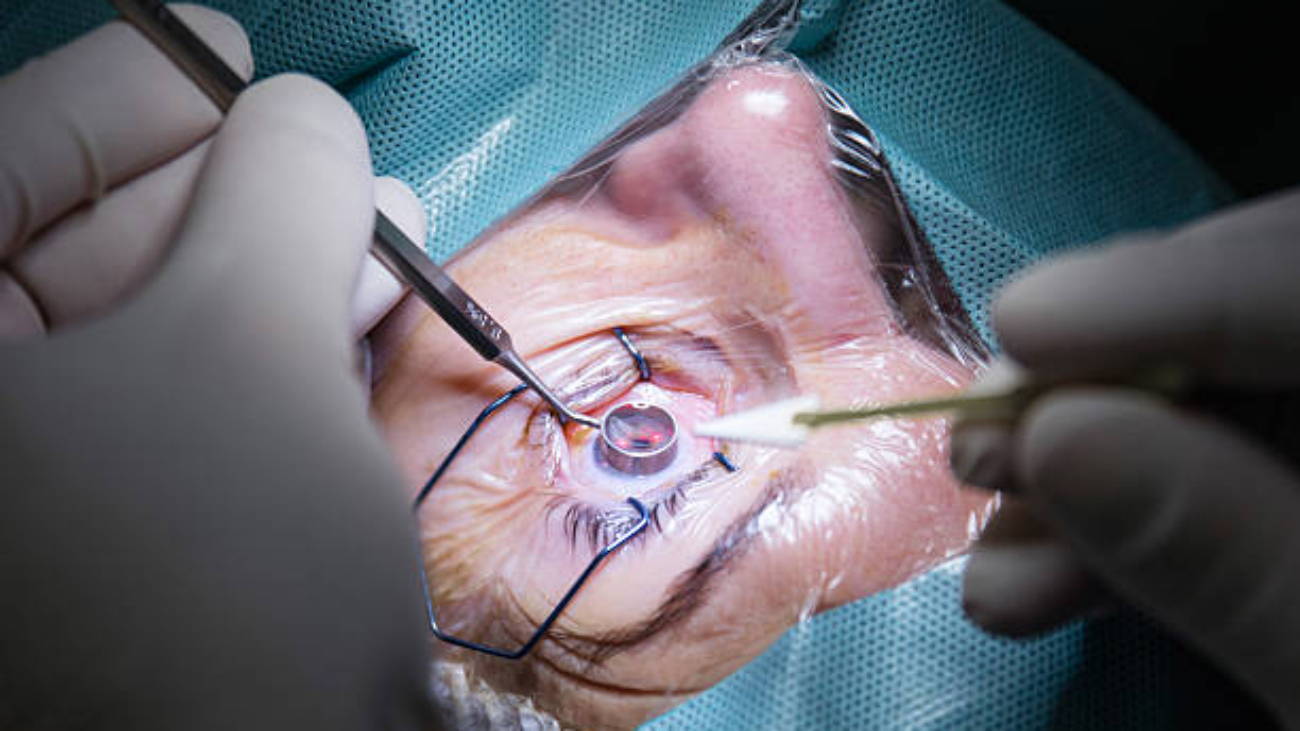
The cornea is one of the most sensitive and remarkable parts of the human eye. It serves as the eye’s outer surface and is responsible for refracting incoming light rays onto the retina due to its high transparency. However, because the cornea is positioned externally and exposed to air, it is highly susceptible to various diseases and disorders. This makes finding the best cornea Doctor in Dubai or the entire Arab world an absolute necessity.
At El-Moatassem European Center, we will introduce you to the The Best Cornea Doctor in Dubai specializing in corneal diseases, along with detailed information about the cornea, its functions, associated diseases, and more.
What Is the Cornea?
The cornea is defined as the transparent tissue located at the very front of the eye. It is entirely devoid of blood vessels and receives the necessary oxygenation directly from the external air.
The cornea is one of the most sensitive vital tissues in the human body due to its rich supply of sensory nerve fibers. Its pain receptor density is 600 times greater than that of the skin and 40 times higher than that of teeth. Thus, any damage to the cornea results in severe pain.
Thanks to its high transparency, the cornea allows incoming light rays to pass easily into the eye, reaching the retina, which translates these light signals into clear images in the brain.
Layers of the Cornea
The cornea consists of five layers: three tissue layers separated by two membranes. These layers, from front to back, are as follows:
- Corneal Epithelium: A non-keratinized cellular epithelial tissue composed of continuously regenerating cells. This layer remains moist due to natural tears and is the most critical layer for determining refractive power.
- Bowman’s Layer (Anterior Limiting Membrane): An irregular layer made of tightly packed, randomly arranged collagen fibers, with a thickness of 8–14 micrometers.
- Corneal Stroma: The thickest and most transparent middle layer, composed of organized collagen fibers and various cells. It consists of approximately 200 stacked layers, each about 2 micrometers thick, accounting for 90% of the cornea’s total thickness.
- Descemet’s Membrane: A thin cellular membrane representing the basement membrane of the corneal endothelium. New cells grow from this layer, primarily composed of type IV collagen fibers, with a thickness of about 15 micrometers (varying by age). Directly in front of this membrane lies Dua’s layer, an extremely thin yet strong layer capable of withstanding pressures up to 2 bar. Some scientific references consider Dua’s layer as a sixth corneal layer.
- Corneal Endothelium: A single-layered tissue composed of cells rich in mitochondria, with a thickness of 5 micrometers. These cells do not regenerate but expand to compensate for damaged ones. This layer is crucial for fluid balance, and any dysfunction can lead to corneal swelling, reduced transparency, and blurred vision.
Causes of Corneal Diseases
Before identifying the best cornea Doctor in Dubai or understanding corneal diseases, it’s essential to recognize the key factors that lead to corneal disorders, including:
- Bacterial infections: Caused by improper use of contact lenses, expired eye drops, or incorrect eye surgeries.
- Viral infections: Resulting from viruses such as herpes simplex, chickenpox, or shingles.
- Fungal infections: Due to mold exposure, high humidity, or contaminated eye care tools.
- Physical trauma: Foreign objects entering the eye, scratches, wounds, or burns to the cornea.
- Chronic diseases: Diabetes, chronic conjunctivitis, or rheumatoid arthritis.
- Prolonged or improper contact lens use.
- Exposure to chemicals, fumes, or eye-irritating smoke.
- Genetic disorders: Affecting the cornea, such as keratoconus or corneal dystrophies.
- Severe chronic dry eye: Leading to corneal abrasions.
- Excessive UV radiation exposure: Known as “snow blindness.”
- Vigorous eye rubbing: Causing corneal damage or worsening injuries.
Most Common Corneal Diseases
Given its external position, the cornea is highly vulnerable to diseases from daily environmental exposure. Choosing the best cornea Doctor in Dubai is crucial for treating these conditions. The most prevalent corneal diseases include:
· Corneal Abrasions
Occur when the cornea is scratched by sharp objects, fingernails, or during activities like welding/carpentry. Symptoms include excessive tearing, sharp pain, inability to open the eye, redness, and irritation. Removing foreign particles and using antibiotics typically relieves symptoms, with healing within 3 days.
· Corneal Opacity
May be congenital or age-related due to unexplained tissue damage. Severe inflammation, burns, or trauma can also cause opacity, significantly impairing vision. Treatment often requires surgical intervention.
· Bacterial Keratitis
A bacterial infection causing ulcers on the cornea’s surface, potentially penetrating deeper layers within 24 hours. Treated urgently with antibiotic eye drops or ointments; unlike viral cases, the eye is not patched.
· Viral Keratitis
A viral infection leading to corneal ulcers. Treated with antivirals and antibiotics, often with a sterile patch to aid healing. Untreated cases (e.g., measles, trachoma, or shingles) may cause vision loss.
· Herpes Zoster (Shingles) of the Cornea
Rarely, the chickenpox virus reactivates in nerves, spreading to the cornea. Symptoms include corneal blisters, fever, and severe neuralgia. Spontaneous recovery is possible with antiviral eye drops. Higher risk in immunocompromised individuals over 65.
· Keratoconus
An abnormal corneal bulge due to genetic factors, chronic steroid use, or vigorous eye rubbing (e.g., vernal keratoconjunctivitis). Disrupts light refraction, blurring vision. Early stages are managed with specialized glasses or therapeutic lenses; advanced cases require surgical correction or corneal transplantation.
Symptoms of Corneal Disease
In cases of minor corneal injuries, the eye often heals spontaneously. However, for advanced conditions, it is crucial to consult the best cornea Doctor in Dubai for a comprehensive treatment plan. Below are common symptoms shared by most corneal diseases, indicating the need for medical evaluation:
- Burning pain in the eye.
- Blurred or cloudy vision.
- Excessive tearing.
- Redness and irritation.
- Severe light sensitivity (photophobia).
- Corneal scarring.
How Corneal Diseases Are Diagnosed
Evaluating and diagnosing corneal conditions requires specialized tools and advanced techniques, available at El-Moatassem European Center under the expertise of Dr. Ahmed Al Moatasim, a leading cornea Doctor with decades of experience. Key diagnostic methods include:
- Corneal Biomicroscopy: Examines all corneal layers under a medical microscopek and it Uses multi-angle light beams to assess the cornea’s response, it’s routine procedure in most corneal evaluations.
- Corneal Refractive Power Measurement: Essential for prescribing therapeutic lenses or planning corneal implant surgeries.
- Corneal Topography: Advanced imaging maps the cornea’s surface with color-coded precision to detects elevations, depressions, astigmatism, or keratoconus.
- Pachymetry (Corneal Thickness Measurement): Measures corneal thickness to assess tolerance for surgical interventions.
- Corneal Specular Microscopy: Evaluates endothelial cell density and regenerative capacity.
- Corneal Sensitivity Test: Assesses the cornea’s ability to focus light onto the retina.
- Corneal Staining (Fluorescein or Bengal Rose): Reveals surface defects using safe dyes under specialized imaging.
Can Corneal Diseases Be Prevented?
- Yes! The risk of corneal diseases especially infectious ones (bacterial or viral) can be reduced by: Avoiding direct contact with infected individuals of conjunctivitis or keratitis patients.
- Never sharing eye makeup, contact lens solutions, or trial lenses.
- Not reusing eye drops between individuals.
- Washing hands and eyes with warm water and soap for ≥30 seconds after exposure to infections.
- Scheduling annual check-ups with the best cornea specialist in Dubai (e.g., at El-Moatassem European Center) for early detection and treatment.
Corneal Transplantation
The cornea undergoes various types of treatments, such as keratoconus stabilization using riboflavin and ultraviolet light, corneal ring implantation, and many other diverse therapeutic methods. However, corneal transplantation remains the most renowned procedure, consistently capturing patients’ curiosity as it is one of the types of human organ transplantation. Naturally, this procedure requires the expertise of the best corneal specialist in Dubai.
The surgical corneal transplantation procedure involves replacing the damaged or diseased cornea with a healthy one obtained from a recently deceased donor or even a high-quality artificial cornea. This procedure enhances vision quality and alleviates pain resulting from corneal injuries.
The primary factors necessitating corneal transplantation include: Corneal damage and degenerative diseases, Keratoconus, Chronic inflammations, Congenital deformities
The procedure can be performed as: Full-thickness corneal transplantation (Penetrating Keratoplasty): Complete replacement of the cornea.
Partial-thickness transplantation (Lamellar Keratoplasty): Replacement of specific corneal layers with healthy ones.
At El-Moatassem European Center, the success rate of this procedure exceeds 95%, owing to Dr. Ahmed El-Moatassem’s extensive expertise and the advanced medical technologies and equipment utilized in the center.
The Best Corneal Doctor in Dubai
Choosing the best corneal Doctor in Dubai means selecting a highly skilled ophthalmologist with extensive years of experience, outstanding academic qualifications, consistently positive treatment outcomes, and professional medical methodologies, depending of these qualities and morals, The esteemed Professor Ahmed El-Moatassem is the top specialist you seek.
With over 20 years of experience, a career rich in achievements and honors, and the most prestigious PhD certifications in ophthalmology, you can rest assured that Dr. Ahmed is among the elite ophthalmologists in the Arab world, Why?
Because he is the first surgeon globally to perform corneal ring implantation for keratoconus in the United States, UAE, and Egypt.
This distinction also applies to his expertise in cataract surgeries, LASIK vision correction, and corneal lens implantation.
Dr. Ahmed El-Moatassem has authored dozens of scientific research papers on eye and corneal health during and after his studies in the United States.
He served as a distinguished university professor at Ain Shams University, training future ophthalmologists worldwide.
ang he is an active member of: The Royal College of Surgeons, The International Society of Refractive Surgery, The American Academy of Ophthalmology.
Most importantly, he established the premier eye care center in the UAE, specifically in Dubai, making it the primary treatment destination for corneal and general eye diseases for patients from around the world.
Add a Comment