



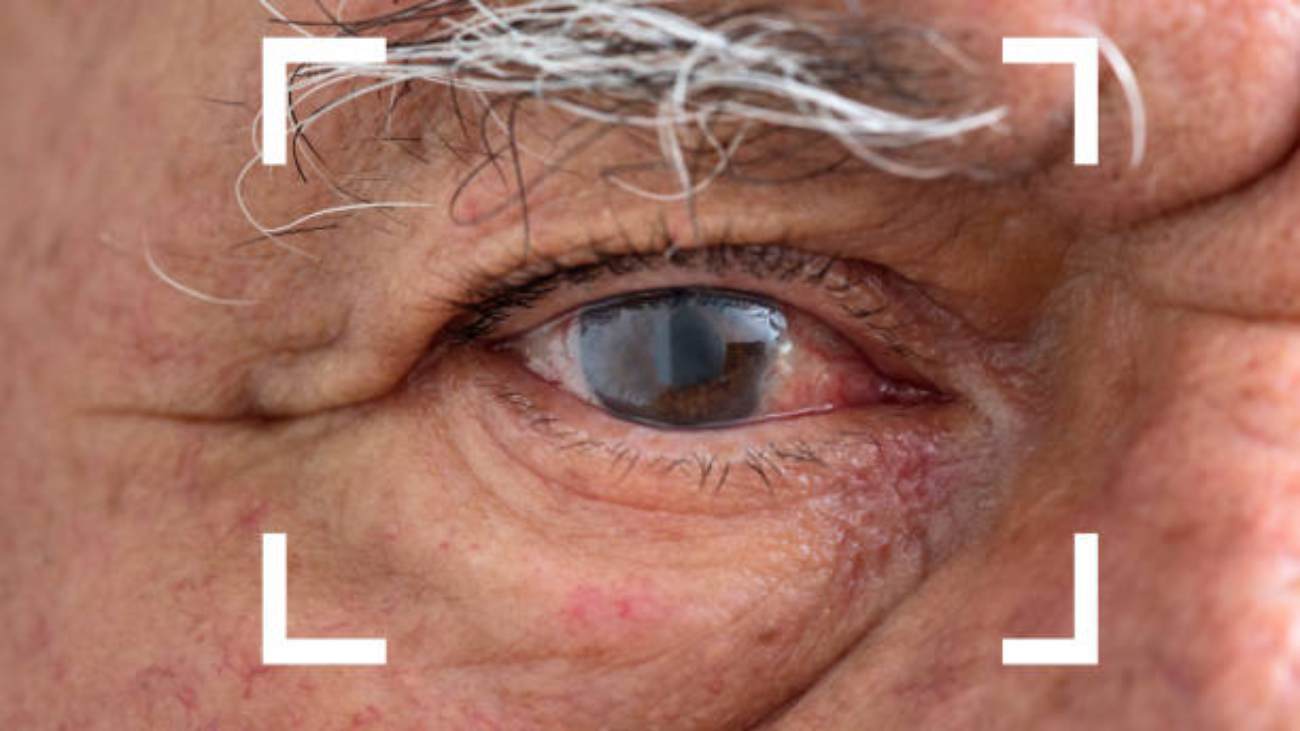
What is cataract surgery in the UAE? What is its cost? When do its results appear? All of them are important questions for every eye patient who suffers from vision problems that hinder him from performing his daily tasks and his life’s affairs. We, in turn, from the Moatassem European eye center, will answer all these questions from a medical point of view, by quoting from the elite ophthalmologists at the international level. If you or a member of Your family suffers from cataracts and you would like to know more about this condition and its treatment Follow us.
The concept of cataract disease
It is a clouding of the lens of the eye, affecting the quality of vision and causing blurred vision. The level of visual damage varies depending on the severity of the cataract.
In the vast majority of patients, cataracts develop at the age of 40 years and above, but there is a small percentage of infants and young people suffering from this condition as well.
Symptoms and signs of cataract
The cataract surgery addresses a wide range of symptoms associated with cataracts that significantly affect the patient’s quality of life, including:
- Blurred vision without pain.
- Double vision.
- Difficulty seeing at night.
- Reduced color contrast and yellowing.
- Difficulty reading in dim lighting conditions.
- Light sensitivity and discomfort from glare
What is cataract surgery in the UAE?
Cataract surgery in the UAE is a simple procedure aimed at removing the cloudy lens from the eye, especially since topical and systemic treatments for this condition are entirely ineffective; treatment involves only surgical intervention.
The process begins with a comprehensive diagnostic phase to confirm the presence of cataracts and the necessity for cataract surgery.
This is achieved through a thorough eye examination that rules out more severe eye diseases affecting the optic nerve and retina,
along with measuring corneal curvature and examining the tear duct. It is important to note that the deterioration of cataracts can vary significantly among patients,
manifesting either gradually over many years or progressing rapidly,
as seen in diabetic patients. Therefore, outdated diagnoses may not be beneficial for everyone and cannot be relied upon.
As for the concept of cataract surgery, it is a surgical procedure in which the cloudy lens of the eye is removed and replaced with a new, defect-free lens that ensures optimal vision without complications. This is performed through a surgical technique called “phacoemulsification”,
which involves making a small incision of no more than 2.8 millimeters in the cornea to facilitate the lens replacement.
Steps for cataract surgery in Dubai
Dr. Ahmed El-Moatassem performs cataract surgery in the UAE with the highest levels of professionalism and surgical skill, ensuring complete healing for the patient and achieving excellent treatment outcomes. The steps of this procedure include:
- Initially, the patient is prepared for the surgical procedure by applying anesthetic eye drops.
- The surgeon begins the operation by introducing a very precise instrument into the lens, which is an indirect laser that relies on thermal energy in fractions of a second to fragment the cataract using ultrasound technology or thermal incision that melts collagen bonds, creating an incision in the capsule with a thickness ranging from 4.5 to 6.5 millimeters.
- After the cataract is fragmented, the lens is flushed with fluid pulses, and all remnants are removed to leave the capsule completely clear (lens emulsification) using the “Zepto” capsule puncture device, which relies on the nano-effect in the lens capsule, or through the Fako device in conjunction with femtosecond technology.
- The artificial lenses are then implanted into the lens capsule through an extremely small incision in the cornea.
- If the replacement lens is of the IOL type, its sides are opened to ensure it is securely placed in the correct position.
- After the lens is implanted, the light focus reaching the back of the eye on the retina is corrected with ease, thereby addressing vision problems and improving its quality.
Cataract surgery techniques
The techniques used in cataract surgery in the UAE vary specifically during the lens emulsification stage based on the condition and the equipment utilized, including:
- Ultrasound: After making a surgical incision in the eye lens, the cataract is fragmented using ultrasound waves.
- Femtosecond Laser: This device creates precise incisions in the cornea to treat Astigmatism and accurately fragment the lens nucleus.
- Extracapsular Cataract Surgery: This technique involves making a relatively large micro-surgical incision in the cornea to remove the affected lens and replace it with a healthy artificial lens.
- Traditional Intracapsular Surgery: This is the older therapeutic method that uses a large surgical instrument to make an incision in the cornea and completely remove the lens along with its capsule.
Types of Lenses Used in Cataract Surgery
At Moatassem European eye center, we utilize the latest techniques and medical equipment,
This also applies to the intraocular lenses used for the common condition of cataracts.
We rely on the highest quality and transparency lenses types to ensure the best outcomes.
Some of the most important types of lenses used include:
• Intraocular Lenses (IOLs)
Intraocular lenses are high-precision, transparent artificial lenses that can be used in refractive treatments as well as in cataract surgery.
These lenses are made from highly transparent plastic and are equipped with side supports that ensure
the lens is securely positioned within its capsule. There are several types of these lenses, including:
- Monofocal Lenses: Designed to improve visual quality, particularly for distant objects.
- Extended Depth of Focus (EDoF) IOLs: These lenses address many side effects associated with cataracts, such as glare, halos, visual difficulties, and night driving problems, while also enhancing near and distance vision.
- Trifocal Lenses: These multifocal lenses are designed to focus light on the retina after cataract removal, providing good vision for both near and distant objects, making them an excellent choice for office work and reading.
• Toric Lenses
Toric lenses are used to treat cataracts, particularly in patients who also suffer from astigmatism.
· Blue Light Filtering Lenses
Unlike most of the previously mentioned lenses that focus on filtering ultraviolet rays,
these lenses are designed to filter blue light by reducing the transmission of short-wavelength light waves to the retina.
This is based on scientific research indicating that the short-wavelength emissions
produced by blue light can act as phototoxic agents to both animal and human eye cells.
Cataract Treatment Techniques
The method of performing cataract surgery in the UAE is directly related to the patient’s condition and the extent of their cataract progression.
Among the most important techniques used in the treatment of cataracts are:
- Cataract Surgery: A surgical incision is made in the eye’s lens using a surgical scalpel, and the surgeon manually fragments the damaged lens for removal. This incision is typically larger and deeper.
- Phacoemulsification (Phaco): This technique utilizes ultrasound waves to break up the damaged lens, which is then aspirated out of the eye.
- LASIK: A specialized laser is used to vaporize the front layer of the affected lens, resulting in its permanent removal.
Benefits of Cataract Surgery
Cataract surgery in the UAE, particularly at the Moatassem European eye center,
offers numerous advantages that attract patients from around the world.
This medical center features a distinguished team of ophthalmic surgeons and consultants from the Arab Homeland.
Key benefits of this medical procedure include:
- Rapid Surgical Procedure and Quick Positive Outcomes: The surgery is performed swiftly, and the positive results typically manifest directly.
- Local Anesthesia with Minimal Side Effects: Local anesthesia is used, often administered through eye drops and sometimes through localized injections, which minimizes side effects.
- High Precision with Micro Incisions: The procedure relies solely on microscopic incisions without the need for surgical sutures, thanks to the use of advanced medical devices like the “Centurion phacoemulsification” system.
- Breadth the circle of patients eligible for the procedure: The procedure accommodates a diverse array of patients without significant exclusions, making it suitable for both children and adults.
- Enhanced Vision Clarity and Acuity: Patients experience significantly clearer vision and improved sharpness, along with the potential to correct various refractive vision problems, including myopia, hyperopia, astigmatism, and more..
Side Effects After Cataract Surgery
Cataract surgery at the Moatassem European eye center in the UAE is considered very safe and produces highly reliable results.
However, as with any surgical medical procedure, there may be unavoidable side effects, albeit rare.
The following are some potential side effects associated with cataract surgery:
- Capsule Opacification: A very thin membrane may develop behind the implanted intraocular lens, leading to blurred vision after the procedure. This condition can be treated with YAG laser.
- Eye Hemorrhage: Although infrequent, bleeding may occur due to surgical errors during cataract surgery; this complication has diminished significantly among patients at our medical center.
- Increased Tear Production: Patients may experience heightened tear production due to friction with the new lens. A follow-up visit is necessary to ensure that no infections are present.
- Nausea, Vomiting, Headaches, and Discomfort: Patients may experience nausea, vomiting, headaches, and a general feeling of discomfort for several hours post-surgery.
- Redness, Burning, and Temporary Dryness: Eyes may exhibit redness, burning sensations, and temporary dryness, all of which typically resolve quickly.
Success Rate of Cataract Surgery
Cataract surgery in the UAE is classified as one of the safest and most effective medical procedures.
It involves replacing the natural lens of the eye with a highly precise artificial lens, without subsequent symptoms or complications.
The success rate of this procedure exceeds 95%, and most patients can completely discontinue the use of glasses and contact lenses within just a few days.
Furthermore, it is noteworthy that recent scientific research and statistical studies conducted in the United States have shown that more than 1,400,000 patients undergo cataract surgery,
with 95% of them experiencing no symptoms or side effects whatsoever.
Cost of Cataract Surgery
Although the cost of cataract surgery in the United Arab Emirates or any other Arab country is among the most common and widespread eye surgeries, it cannot be fixed at a standard price.
In most cases, a specific price is determined for each patient based on their health condition,
the type of procedure, the technology used for treating their cataracts,
as well as the type of artificial lens that will be implanted.
Additionally, there are extra factors related to the reputation of the surgeon and the quality of the medical center where the surgery is performed.
The advancement of medical equipment, the standard of the medical center,
and the additional services provided, such as diagnostic tests and postoperative monitoring,
also play a role. Other health-related needs, such as prescription glasses, sterile towels
, and eye guards, given to each patient individually, should be considered as well.
Taking these points into account, the Moatassem European eye center is regarded as one of the best in all these aspects.
We offer thoughtful prices that suit all patients and ensure their safety and eye health, with the cost of cataract surgery starting at $1,500, subject to increase.
The Best Cataract Doctor in the United Arab Emirates
There’s no need to search extensively for the best eye doctor in Dubai,
as Dr. Ahmed El-Moatassem tops the list of the best physicians in the UAE, Egypt, and the entire Arab world.
He is an outstanding physician with remarkable experience and a kind demeanor,
who is close to his patients and most attentive to their concerns.
He renews joy and hope in the eyes of millions, alongside dozens of prestigious positions and accolades that he has rightfully earned in the medical, scientific, and academic fields.
Hes a professor of medicine at Ain Shams University, a member of the International Society for Refractive Surgery,
the American Academy of Ophthalmology, and a Fellow of the Royal College of Surgeons, among many other roles and numerous impactful scientific publications in renowned medical journals.
All of these achievements shine a spotlight on Dr. Ahmed El-Moatassem center as a trusted place for cataract surgery, as he prioritizes the vision of his patients above all.
Moreover, Professor Dr. Ahmed El-Moatassem has dedicated his attention and expertise, spanning over 25 years,
to establish a medical center that meets global standards in every aspect.
Supported by a passionate team of skilled doctors and dedicated nurses,
he meticulously selects the latest medical devices and equipment,
often traveling to the world’s most advanced medical exhibitions to choose the latest technology and understand all its specifications.
Thus, he proves to be the best, both in word and deed.
Frequently Asked Questions
• What should the patient do after cataract surgery?
In the period following cataract surgery, Dr. Ahmed El-Moatassem recommends a set of essential guidelines and precautions to maintain the desired results, including:
- Absolutely avoiding rubbing or touching the eye to prevent displacing the new lens. The patient may take pain relievers if experiencing any discomfort.
- Resting adequately and avoiding stress for at least 48 hours after the procedure.
- Avoiding visual strain for several days post-surgery, such as watching television or focusing for extended periods on mobile devices.
- Regularly using the anti-inflammatory eye drops prescribed by the doctor, such as Chloramphenicol, Dexamethasone, and others.
- Wearing an eye shield during sleep in the first few days after the procedure.
- Refraining from lifting heavy objects or engaging in strenuous sports.
• When will vision stabilize after cataract surgery?
Improvement in vision can be noticed immediately after the new lens is implanted,
and the patient will feel the difference right away.
The recovery will continue gradually, with stable and final results typically achieved within 8 weeks post-surgery.
• How long does cataract surgery take?
The duration of cataract surgery at Dr. Ahmed El-Moatassem’s center in the UAE does not exceed 20 minutes,
from the time the eye is locally anesthetized until the completion of the surgery.
However, the patient may remain at the center for about two hours while all pre- and post-operative procedures are completed.
• What causes cataracts in the eye?
Cataracts can arise from numerous pathological or mechanical factors, including:
- A mechanical injury to the head or eye.
- Complications from advanced diabetes.
- Aging of the eye.
- Changes in the internal structure of the eye with advancing age.
• When should cataract surgery be performed?
Surgery becomes necessary when the patient’s vision is so blurred and unclear that it negatively impacts reading and driving,
even with corrective glasses and contact lenses.
Additionally, if there’s a constant need to update glasses prescriptions,
cataract surgery becomes an essential procedure rather than an option.
Contrary to widespread misconceptions suggesting that cataract surgery needs to be postponed until the cataract matures for easier removal,
this information is incorrect; the necessity for surgery is solely based on its impact on the patient’s vision.
• Is cataract surgery dangerous?
Cataract surgery is widely performed both in the UAE and abroad and is considered very safe,
especially at the Moatassem European eye center,
where the highest surgical expertise, superior medical care, and the latest medical devices and equipment are available.
Add a Comment